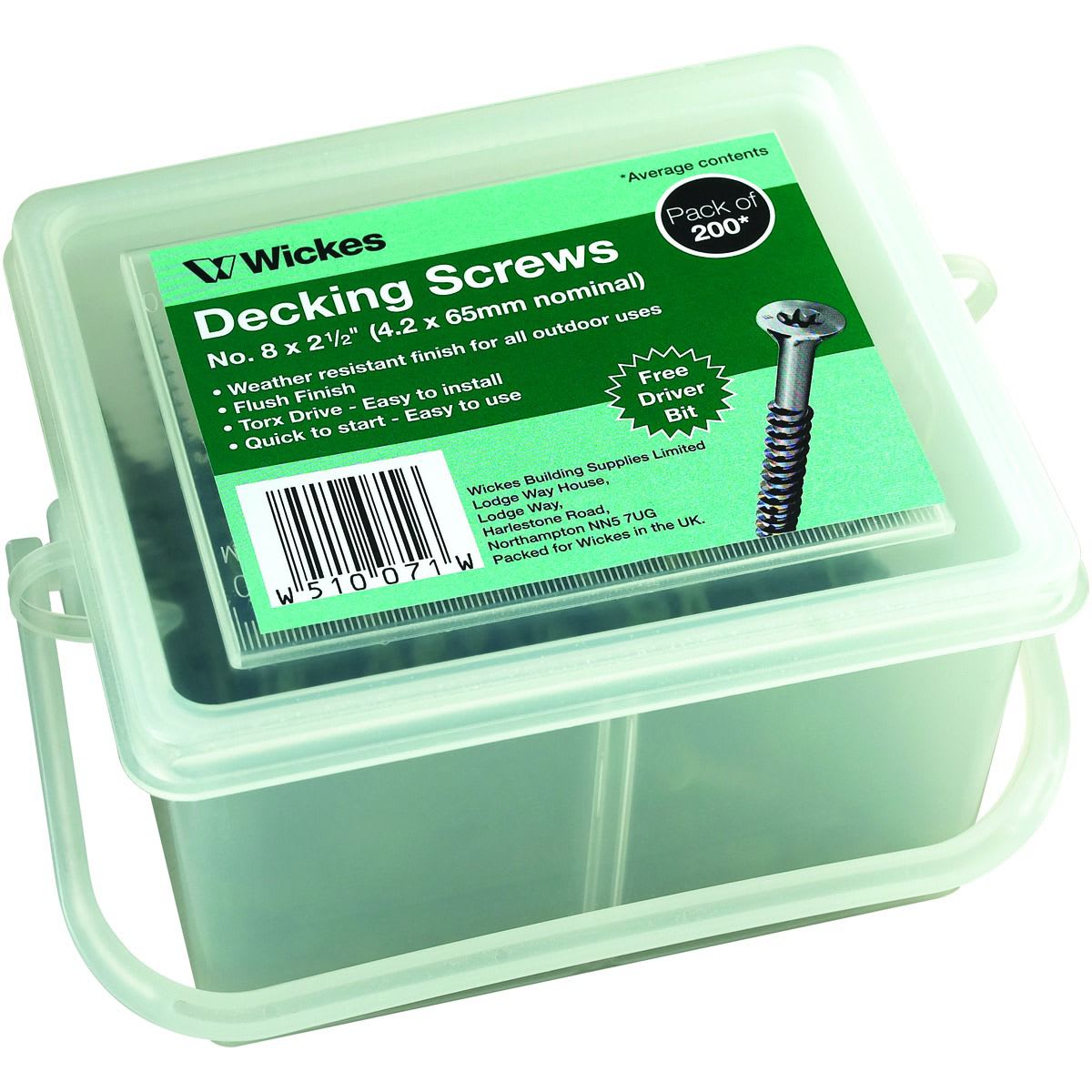
Explore our range of plastic and composite deck boards and screws, to create a stylish, low-maintenance outdoor space you’ll love. Choose from various colours and finishes to suit your home. To complete your perfect deck, browse our collection of decking balustrades and posts, offering safety, style, and functionality. Whether you're renovating your garden, patio or balcony, our decking products are designed to withstand the elements while enhancing the beauty and usability of your outdoor area. Create a welcoming and functional outdoor space where you can relax and entertain with ease. Explore our selection of decking boards today and start building your dream garden deck.
What is composite decking?
Composite decking is a type of decking which is made from mixing wood fibres and plastic together to create the look of wood, but through a more durable and low-maintenance solution.
What is better: composite or wooden decking?
Composite decking offers lower maintenance, durability and resistance to rot, mould and insects compared to wooden decking. On the other hand, timber deck boards have a natural aesthetic, blending effortlessly into your garden. Make the decision by considering your personal preference and budget.
How much is composite decking?
Composite decking ranges in price, depending on things like the type, length and pack quantity. Our collection ranges from £39.
How long does composite decking last?
Composite decking lasts anywhere between 25 and 30 years, but it can last even longer with proper maintenance.
How much composite decking do I need?
The easiest way to determine how much composite decking you need is to measure the length x width of your planned deck, which will be the total square metres you’ll need to purchase.
Is composite decking waterproof?
Composite decking is water-resistant and can withstand moisture better than traditional wood decking, but it's not completely waterproof. Proper installation and sealing are essential to prevent water penetration and potential damage over time.
What is the life expectancy of composite decking?
Eva Tech Composite Decking has a 10 year warranty, while the Eva-Last Apex and Infinity decking comes with 25 years. Factors such as exposure to sunlight, moisture and wear affect longevity but regular cleaning and periodic inspections can help extend lifespan.
How to clean composite decking
-
Using an outdoor broom or leaf blower, brush away any leaves or dirt
-
Rinse the decking with your garden hose
-
Using warm water mixed with a mild soap detergent, scrub the boards to lift the dirt away
-
Rinse away all the soap residue
Regular cleaning helps keep your decking looking its best over time.
Can you paint composite decking?
We wouldn’t recommend painting composite decking as it’s designed with a finish that doesn’t bond well with paint. It shouldn’t necessarily need painting either as it’s designed to be low maintenance and long lasting.
How do I cut composite decking?
The best way to cut composite decking is outlined below:
- Wear safety glasses and a dust mask as protection.
- Mark where you want to make the cut with a pencil
- Using a circular saw,mitre saw or jigsaw with a fine-tooth carbide blade, cut slowly and gently along your cut line, supporting the board at all times to prevent chipping or vibrating.
Is composite decking slippery?
Composite decking is designed with a textured or woodgrain finish that provides good grip, but just like any outdoor surface, it can become slippery in certain weather conditions.
Does composite decking fade?
Plastic and composite decking is designed to be UV resistant, which helps slow down fading caused by sunlight. However, over time, you could potentially notice some slight colour fading.
Can you put plastic decking over wood decking?
Yes, it’s possible to install composite decking on top of an existing wood deck frame, but you’ll need to make sure that the timber subframe is strong, level and rot-free.
How do I get rust off plastic decking?
The best way to wash plastic decking is with warm, soapy water before then applying a specialist composite deck cleaner or a non-abrasive rust remover, rubbed gently into the problem area using a soft brush or cloth. Rinse and repeat if needed.
Is composite decking plastic?
Partly. It’s a combination of plastic and wood fibres for a low maintenance and robust decking solution.
Can you use bleach on composite decking?
It’s advised that you don’t use strong bleach on composite decking as this can cause damage to the surface, as well as the risk of staining and fading the colour.
Does composite decking expand?
Yes, composite and plastic decking expands and contracts in line with the weather, due to its plastic contents.
Why does composite decking have grooves on the bottom?
Composite decking is often designed with grooves on the bottom to aid expansion and contraction, reduce weight and materials, improve stability, and enhance airflow and drainage.
Can you burn composite decking?
No, you should avoid burning composite decking as its materials contain chemical additives and plastic, potentially causing toxic fumes and harmful smoke. You should check with your local recycling centre on how best to dispose of it.
Can you jet wash composite decking?
Yes, as long as you’re careful and use a low-pressure setting, keep the nozzle 20-30cm away from the surface, use a fan spray and be steady with movements.
Does composite decking scratch?
It’s possible for composite decking to get scratched, but it’s less likely than wooden decking.
Does composite decking get hot?
Yes, it can get quite hot as plastic retains heat, especially if a dark colour or in direct sunlight. To cool composite decking, shade the area and hose it down. Alternatively, you can choose a light coloured deck.
Does composite decking shrink?
Yes, it may shrink slightly, but it contracts and expands more due to temperature changes.