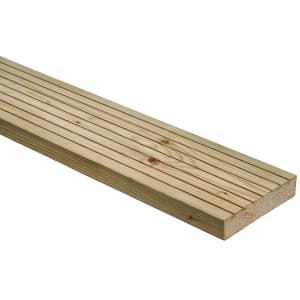
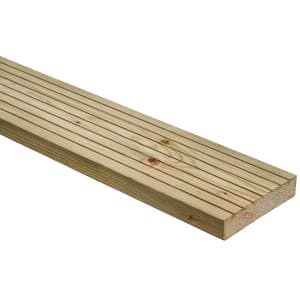
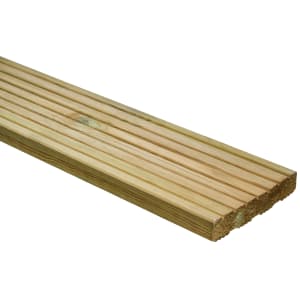
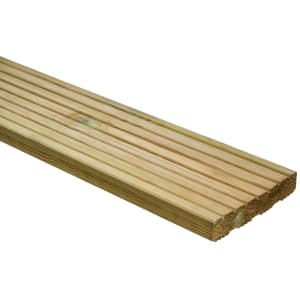
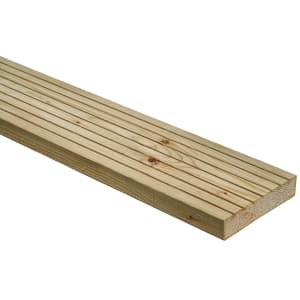
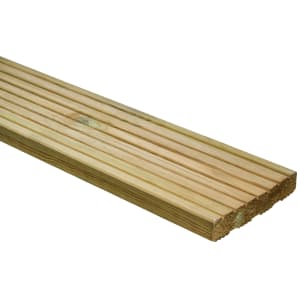
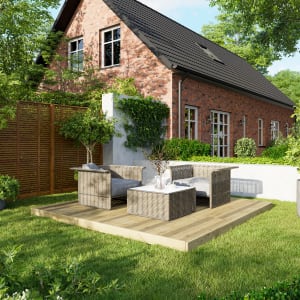
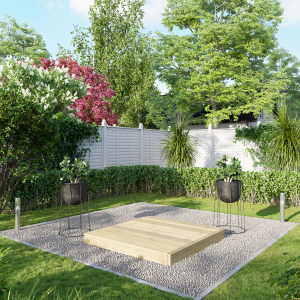
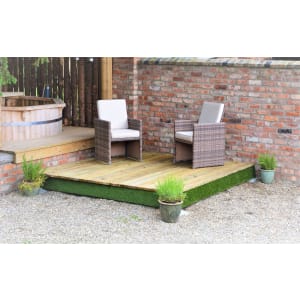
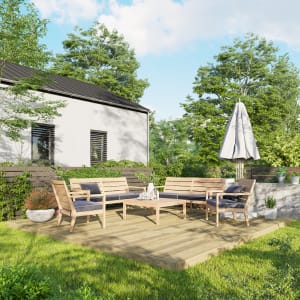
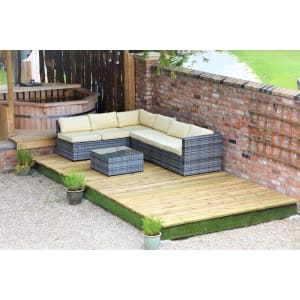
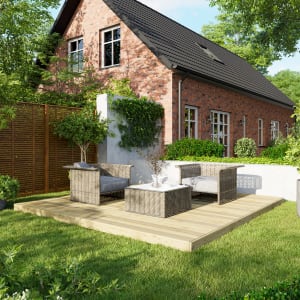
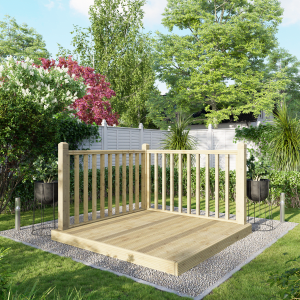
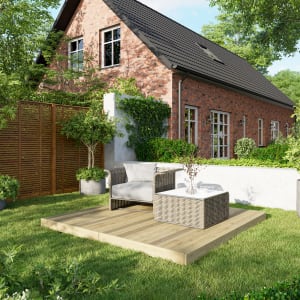
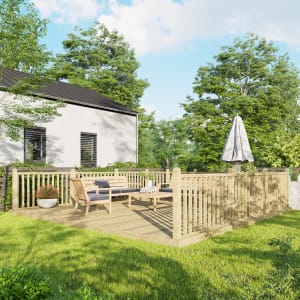
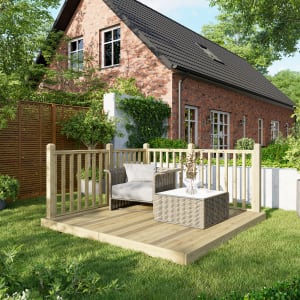
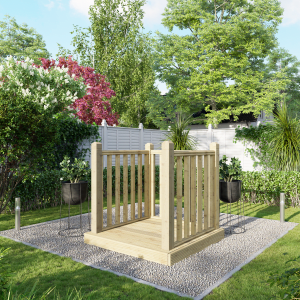
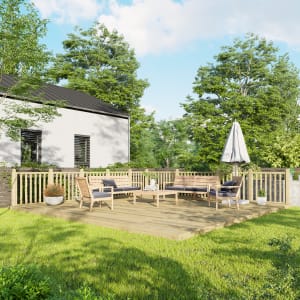
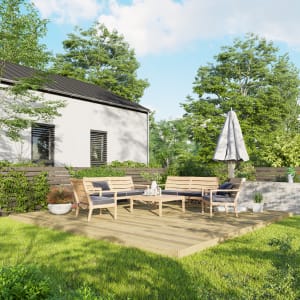
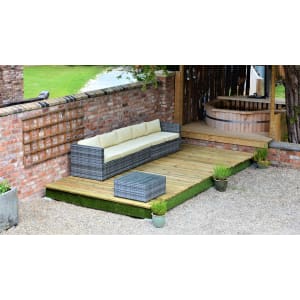
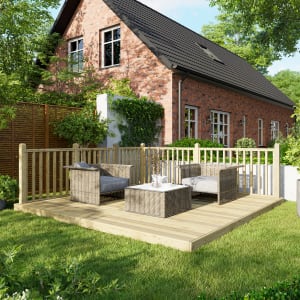
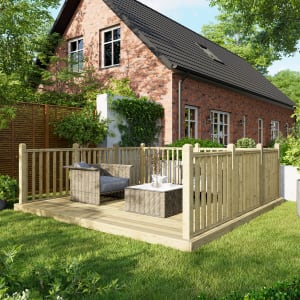
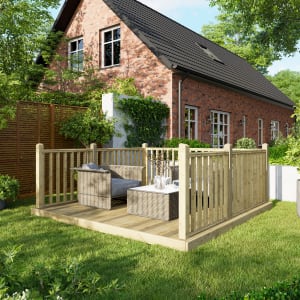
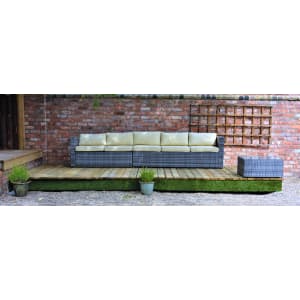
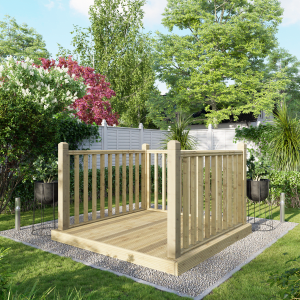
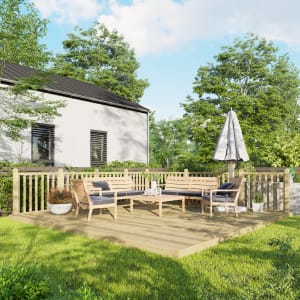
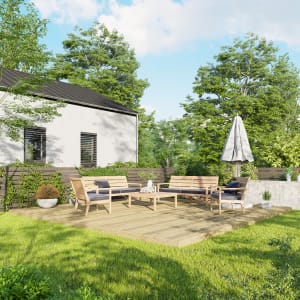
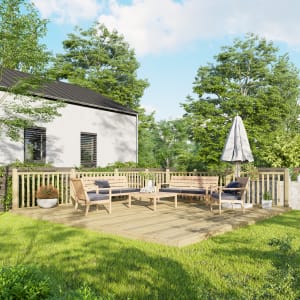
Enhance the aesthetics and functionality of your garden space with our timber decking boards. Designed with longevity and strength in mind, our affordable decking boards can withstand large loads and footfall, making them ideal for social gatherings. They’re also resistant to the elements, especially when you apply a specialist wood treatment. Available in a range of thicknesses and wood types, choose wooden deck boards to suit your style and needs.
Need help with installation? Learn how to plan and lay decking using our helpful guide.
FAQs
What are decking boards?
Decking boards are long, flat boards that are used to create an outdoor deck or raised platform, typically in garden spaces.
How many decking boards do I need?
To find out how many decking boards you’ll need for your garden, measure the total area of your decking space and a singular decking board, then divide the space total by the board total. We recommend adding an additional 10% so you can cut freely.
How much are decking boards?
Our range of timber decking boards ranges from £7-£24 per board.
How do you clean decking boards?
How you clean your decking boards will depend on their material, but for timber decks, you’ll want to sweep off any debris, before scrubbing each deck board with a stiff brush and warm, soapy water. Once finished, rinse thoroughly and then let it dry before placing any furniture or pots back onto it. If you’d like a deeper clean, use a pressure washer.
What is the best material for decking boards?
The best materials for decking boards are timber or composite decking. Timber decking provides a natural look, is easy to cut and install and is often at a lower price point. Composite decking is usually a higher price point but is low maintenance and resistant to rot and splintering.
What gap should you leave between decking boards?
We recommend leaving a 5-6mm gap between each deck board for drainage purposes, and because boards will naturally expand from moisture.
How to install decking boards
Installing decking boards involves preparing a solid subframe, laying the boards evenly, and fixing them securely so the surface is level, safe, and long-lasting. Head over to our how to lay decking guide to find all the steps you need to take.
Can you sand deck boards?
Absolutely. By sanding down your deck boards, you’ll effectively remove splinters, old paint or treatment, or rough/weathered wood, creating a smooth surface for staining or oiling.
Can you paint deck boards?
Yes, you can paint timber deck boards but just ensure you’re using an exterior wood primer followed by a decking paint that has been designed for outdoor use to ensure they withstand the weather and foot traffic.
Which way up for decking boards?
In most cases, decking board should be installed with the slightly rounded or grooved side facing upwards - this is to improve grip. However, you can install them smooth side up for a more aesthetically pleasing and easy to clean option. If you do so, make sure to be wary of creating a slip hazard.
How do you screw down deck boards?
To screw down deck boards, you should follow these simple steps:
- Position the board onto the joists, with a small gap between both for drainage purposes (5-6mm).
- Pre-drill pilot holes towards the edge of the boards to prevent any splitting (only if you’re using hardwood).
- Using exterior-grade decking screws, drive them down into each joist; using at least 2 screws per joist per board.
- Ensure screws are below the surface slightly so they don’t stick up.
- Keep working along, making sure it’s aligned throughout.
How wide are deck boards?
Decking boards vary in width, with our range starting from 120mm to 5988mm, allowing you to find an option to suit your needs.
Why do decking boards have grooves?
The grooves on decking boards’ main purpose are to enhance grip and reduce the risk of slipping, especially in wet conditions. This design also helps with drainage, warping and manufacturing efficiencies.
Shopping for Decking Boards
Shopping for decking boards to suit your space, budget and garden aesthetic can be a minefield, which is why we’ve outlined key considerations for the decision.
By Size
Decking board sizes vary by length, width and thickness. By having your measurements confirmed beforehand, you’ll save time, waste and joins, and have peace of mind that your deck can withstand the loads/footfall you’ve got planned. Which decking board size you go for will impact how easy they are to install, their performance and how they look.
Length: The shorter the length determines where the boards are best suited for. For instance, 1.8-2.4m boards are best used in smaller or awkwardly shaped spaces like balconies, patio and pathways. They’re easy to install, so ideal if you’re heading the project alone. 3.6mm boards are our most popular, with little joins and suitable for medium-sized spaces. 4.8m are for the larger spaces with little disruption for a clean, seamless result like garden decks, entertainment areas and spacious patios.
Thickness: The thickness of a deck determines strength and durability, as well as the appearance. Thinner boards of 25mm are best for light, domestic use, like that on garden seating areas, patios and balconies, while also usually being more affordable and lighter to handle.
You can then get standard thicknesses of 27-32mm, which tend to be used for residential decking as they combine strength, durability and affordability. Lastly, thicker boards of 35mm+ should be opted for high-traffic areas, commercial spaces and larger decks as they’re robust and offer a more substantial feel when walked on.
Width: The width of the boards influences installation time, performance and the overall look too. Narrow boards (120mm) offer a detailed and traditional appearance which is often favoured on smaller decks, curved design or where a sleek finish is required. Medium-widths (120-145m) are very popular residentially as they tick both stability and presentability. Wide boards (145-200mm+) are suitable for more modern, larger spaces, creating a more open feel without using a lot of boards.
By Colour
The colour of your timber boards is an important consideration as you’ll want to make sure they go with the look of your outdoors, and not clash with the fencing, brickwork or other elements in the space.
We stock both natural and brown timber boards at Wickes. These are classic shades that suit all types of gardens.
Natural: A modern option that can instantly brighten a garden due to the light wood. They work perfectly with lighter fence panels and modern furniture set-ups.
Brown: A more classic finish that works well in both modern and traditional gardens. A slightly darker shade makes it ideal next to darker accents throughout the garden.
Non-Treated & Treated Decking Boards
Both treated and non-treated timber decking boards are available to purchase. Which you go for depends on your future plans and maintenance.
Treated boards: Treatment helps protect the wood from rot, insects, weathering and fungal decay, prolonging its lifespan and lowering maintenance costs.
Non-treated boards: Non-treated are best for temporary decking set-ups, unless the vision is to treat them later with a suitable wood treatment.
Decking Kits
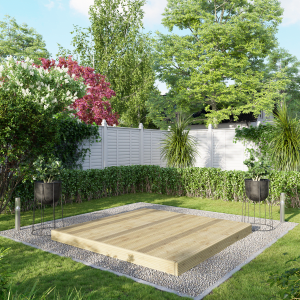
Our decking kits provide everything you need for a successful deck installation. You can find timber beams and decking boards cut to length, pre-hung joist hangers and height adjustable concrete foundations, allowing for installation on sloping or undulating ground in the kit. Saving you time and preparation so you can get the job done in confidence.